$495/month or $1295/quarter · Scheduled site visits under contract
Inbound Load Radiation Screening for Scrap Yards and Recyclers
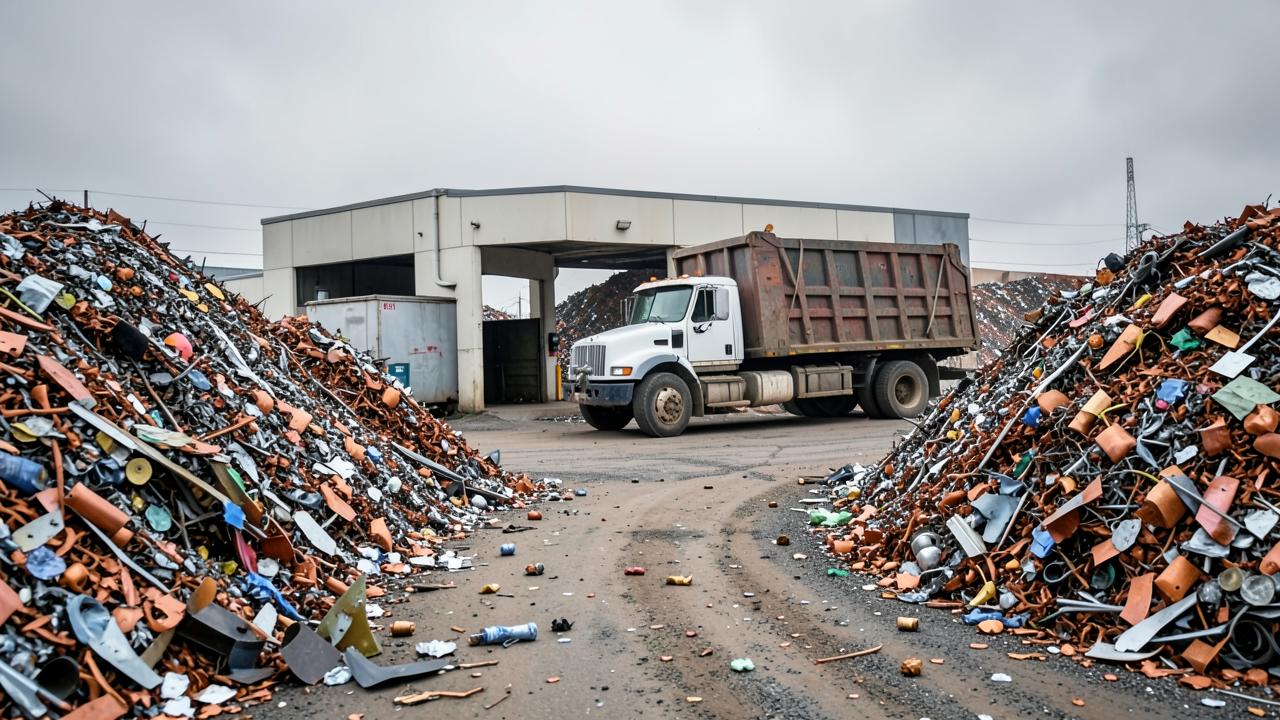
An orphaned source is a radioactive source that has escaped regulatory control — a discarded medical device, an industrial gauge, a well-logging source — and ended up in a load of scrap. One of them in a shredder or a melt can contaminate an entire load, the equipment that processed it, and the facility around it. Screening at the gate is cheap. Everything after that is not.
Radiation Alert Ranger — Geiger-Mueller pancake-probe survey meter
Last calibrated on · calibrated weekly
What an orphaned source actually looks like
Rarely anything dramatic. Most are small sealed sources inside ordinary-looking steel housings: density and level gauges off decommissioned process lines, moisture gauges from construction, radiography cameras, medical equipment components, and instrument parts that were never routed through proper disposal.
They arrive because someone cleaned out a building and sold the contents by weight. That is why detection has to happen at intake, on the load, rather than depending on the supplier having noticed.
How the program works
Scheduled inbound-load screening visits
Recurring site visits — weekly spot-checks under a monthly contract, or a scheduled quarterly audit — surveying inbound loads and staged material with a pancake-probe survey meter.
Staging and pile background mapping
We establish and re-check background across your staging areas so an anomaly stands out against your own yard, not against a textbook figure.
Written documentation per visit
Every visit produces a dated record: areas surveyed, loads checked, readings, anything flagged, and the instrument calibration date. That paper trail is the point of the program.
Escalation guidance, not disposal
If something reads high we stop, isolate the reading, document it, and hand you a clear written account for your own escalation to the appropriate authorities and your radiation safety advisors. We do not handle, transport or dispose of sources.
Facilities we screen beyond the scrap line
Junkyards and salvage yards
Vehicle salvage brings in gauges, instruments and aftermarket parts nobody catalogued. We survey intake areas, crush piles and parts racks, and map background across the yard so an anomaly stands out against your own ground.
Warehouses and storage facilities
Abandoned units, repossessed inventory and long-stored industrial equipment. Facilities auctioning off unpaid units use this before an auction day rather than after a buyer complains.
Recycling and transfer stations
Mixed-stream intake, baled material and staging bays, surveyed on a defined cadence with a written record per visit.
Why a service contract rather than a portal monitor
Fixed portal monitors are excellent and expensive, and for small and mid-sized yards the capital cost is hard to justify. A recurring screening contract puts a calibrated instrument and documented procedure on your site at a fraction of that, and it is often the practical step between doing nothing and buying hardware.
Contracts run $495 per month for weekly spot-check visits or $1295 per quarter for a scheduled quarterly audit, statewide. Lower-throughput sites such as stone yards and warehouses run on a lighter schedule at $395 per month. Multi-site operators should call for a combined rate.
What you receive
A dated screening record for each visit: areas and loads surveyed, background reference, all readings, anything flagged with photographs and location, and the instrument calibration date — retained as a documented history for your facility.
Common questions
How much does scrap yard radiation screening cost?
$495 per month covers weekly spot-check visits, and $1295 per quarter covers a scheduled quarterly audit, anywhere in Florida. Multi-site operators can be quoted a combined rate.
What is an orphaned radioactive source?
It is a radioactive source that has fallen outside regulatory control and entered the scrap stream — commonly a decommissioned industrial gauge, radiography component or medical device part. A single one can contaminate an entire load and the equipment that processes it.
Does this replace a fixed portal monitor?
No. Portal monitors screen every vehicle continuously; a scheduled survey program screens on a defined cadence with documented results. For yards without portal hardware it is a practical, documented layer of protection rather than an equivalent one.
Does this satisfy a regulatory requirement?
No. Our screening is an independent, informational service and is not represented as satisfying any specific agency's statutory testing or monitoring requirement. Facilities with regulatory obligations should confirm those with their own radiation safety advisors.
How it works
Three steps, no surprises
Book a consultation
Tell us the property, the item, or the facility and what prompted the call. We confirm scope, price and the travel zone in writing before anything is scheduled.
On-site survey with our calibrated instrument
We survey with the Radiation Alert Ranger, taking a local background reference first, then working the area to a fixed pattern so nothing is sampled by chance.
Receive your written report
A written report with the hot-spot map, every recorded reading against your own site background, photographs, and the instrument calibration date. Typically within 48 hours.
Methodology
How we survey — the actual method
Background reference first
Before anything else we record ambient background at the property line. Every later reading is reported against that number, because a reading only means something relative to local background.
Fixed-pattern coverage, not spot checks
Interior areas are walked room by room at a steady pace with the probe held at a consistent height. Yards and lots are walked on a grid — roughly 15-foot lanes on a typical residential lot, tightened where the meter responds.
Hot-spot confirmation
Anywhere the count rate rises above the site background, we stop, tighten the search, and take timed readings at the peak. A location is only recorded as a hot spot after it repeats on a second pass.
Priority zones get extra time
Bedrooms, children's play areas, garden beds, home offices and any spot where someone spends hours at a time are surveyed more densely than pass-through space.
Everything is documented
Each recorded reading is logged with its location, the value, the time, and the instrument calibration date, then plotted onto a floor plan and lot sketch in the report.
Who performs the survey and how we work
Surveys are performed by the owner-operator of EMF Testing Services, trained in survey-meter operation and in the survey procedure described on this page, working to the same written methodology on every job.
We hold no regulatory role and claim no agency standing. What we provide is a documented instrument reading set: where the meter was placed, what it read, when the instrument was last calibrated, and how those readings compare to the background level measured at your own property on the same day.
Our radiation surveys are independent, informational measurements performed for personal due diligence. They are not represented as satisfying, replacing or substituting for any specific government agency's statutory testing, survey or disclosure requirement, and they are not a medical or health assessment.
Find out what's actually there.
One all-inclusive price: $399 for a complete EMF inspection of any size home. That covers every test, every room, and the written report — no square-footage tiers. Flat travel zones apply outside Hillsborough County; we serve the entire state of Florida.